★★★★★
I started out thinking it was just another adventure book, but at every stop on the journey I saw myself in the apprentice. I finished it seeing my own dreams in a completely different way.
Mariana F., Brazil

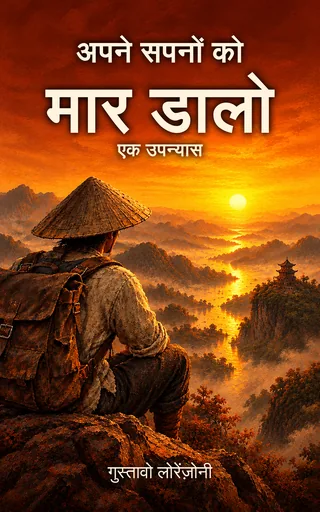
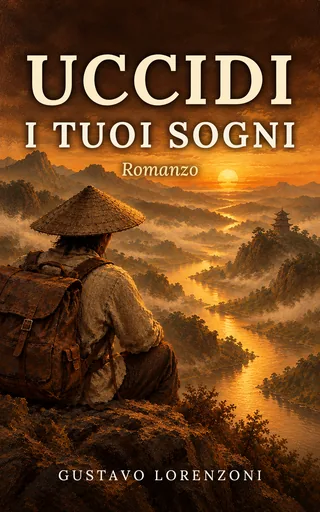
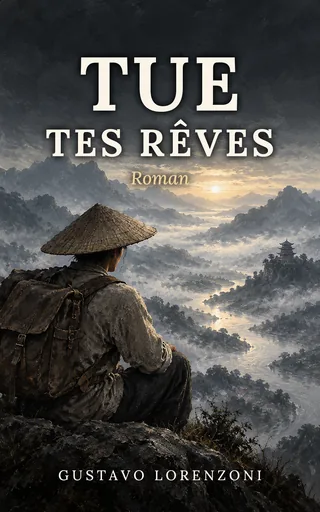
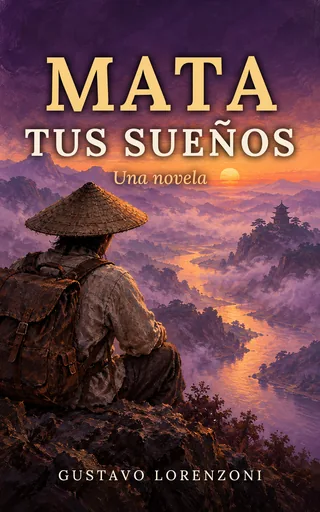
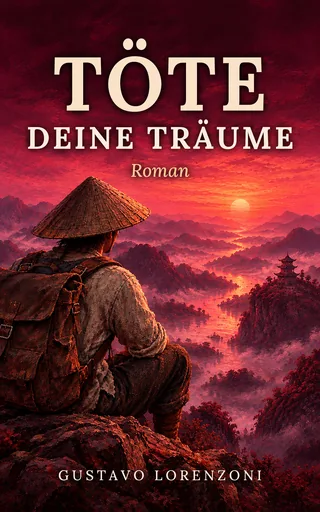
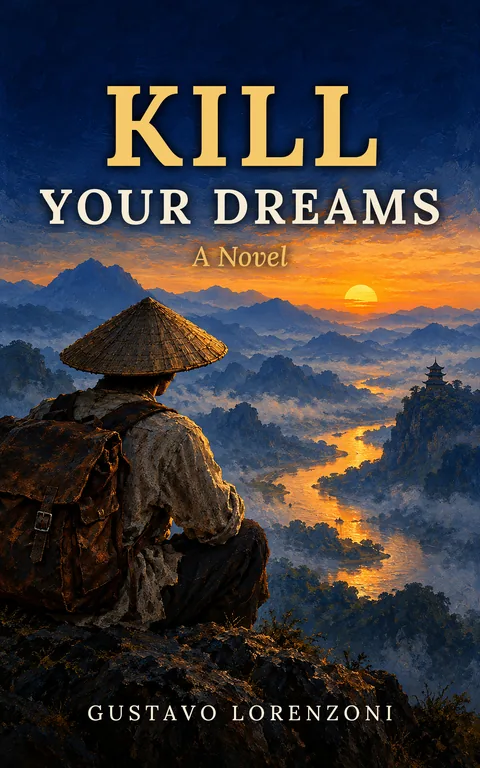
A young peasant, a sealed wooden box and three words that take him from the rice fields of China to the summit of Mount Kailash.
Now on Kindle in English, Spanish, Italian, German, French and Hindi · Read the synopsis
The same story in every edition. All are Kindle ebooks sold by Amazon, and the print edition is available only in Portuguese for now. Prices are shown on Amazon.
 ENGLISH
Kindle · Amazon.com, .co.uk, .ca, .com.au and .in Kindle+
 ESPAÑOL
Kindle · Amazon.com, .es y .com.mx Kindle+
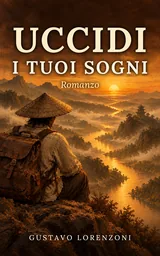 ITALIANO
Kindle · Amazon.it Kindle+
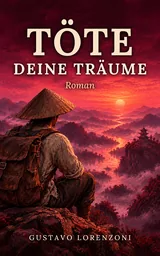 DEUTSCH
Kindle · Amazon.de Kindle+
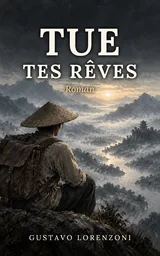 FRANÇAIS
Kindle · Amazon Kindle+
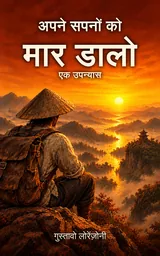 हिंदी · HINDI
Kindle · Amazon.in Kindle+
 PORTUGUÊS · ORIGINAL
Kindle · Amazon.com.br · edição impressa também disponível
Kill Your Dreams is the translation of Mate Seus Sonhos, the original novel by Brazilian author Gustavo Lorenzoni, released in Brazil in 2026. In Portuguese it has already sold more than 100,000 print and digital copies, almost always through readers recommending it to one another.
Now the same story is available on Kindle in Portuguese (Mate Seus Sonhos), English, Spanish, Italian, German, French and Hindi, translated with care to keep the author's voice and the timeless tone of the master. Known in Portuguese as Mate Seus Sonhos, in Spanish as Mata tus sueños, in Italian as Uccidi i tuoi sogni, in German as Töte deine Träume, in French as Tue tes rêves and in Hindi as अपने सपनों को मार डालो.
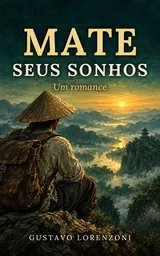
Mate Seus Sonhos, o romance de Gustavo Lorenzoni: a edição original em português, com mais de 100 mil exemplares vendidos no Brasil.
Print edition: available only in Portuguese for now. The English, Spanish, Italian, German, French and Hindi editions are available on Kindle only. Portuguese readers can read it on Kindle through the Portuguese Kindle page, and find the print and digital editions on mateseussonhos.com.
China, 1891. A young peasant works the family rice paddies from dawn to dusk and watches his dreams drift further away every year. Tired of waiting for a different life, he climbs sacred Mount Emei in search of a master who can give him answers.
Instead of answers, he receives a mission. He must carry a small wooden box, the Jade Box, to the summit of Mount Kailash in Tibet. He cannot open it, lose it, sell it, or let anyone take it from him. And before he leaves, the master speaks three words that defy everything he thought he knew:
"Kill thy dreams."
So begins a journey of thousands of miles through China, Burma, Bengal, India, Nepal and Tibet. With Arnakabe, a loyal and stubborn mule, at his side, the peasant, now the master's apprentice, will face wolves, storms, hunger, the temptation of gold and, above all, his own shadow. Along the way he meets monks, elders, merchants, nomads, and Xiaodan, a red-haired young woman who changes the course of his heart.
At every stage he discovers one of the Eight Noble Paths of the Dragon's Crossing, an ancient philosophy that transforms anyone who dares to walk it. But only at the top of the world will he understand what those three words truly mean.
| Title | Kill Your Dreams (original: Mate Seus Sonhos) |
|---|---|
| Author | Gustavo Lorenzoni |
| Genre | Adventure novel, historical fiction and spiritual journey |
| Setting | China, Burma, Bengal, India, Nepal and Tibet, late 19th century |
| Original edition | Portuguese, Brazil, 2026: print, digital and Kindle |
| Translations | English, Spanish, Italian, German, French and Hindi, on Kindle. The original is also on Kindle in Portuguese. |
| Title in each language |
|
If you loved Paulo Coelho, Hermann Hesse or William P. Young, you already know this crossing: a young man leaves the fate he inherited, meets masters along the way, loses himself in the glitter of gold and only at the end understands what he was really looking for. The difference lies in the answer each book finds.
The universe conspires in favor of those who pursue their Personal Legend.
Wisdom cannot be taught: it can only be found by living.
A master, an apprentice and three words that take him from China to Tibet.
Looking for books like The Alchemist by Paulo Coelho, Siddhartha by Hermann Hesse, The Shack by William P. Young, The Monk Who Sold His Ferrari by Robin Sharma, Way of the Peaceful Warrior by Dan Millman, Jonathan Livingston Seagull by Richard Bach or The Little Prince by Antoine de Saint-Exupéry? Kill Your Dreams is an adventure novel and spiritual journey with a master and an apprentice, for readers of novels about finding your purpose, self-discovery fiction and books about dreams and about living the life you want, on Kindle in six languages.
I started out thinking it was just another adventure book, but at every stop on the journey I saw myself in the apprentice. I finished it seeing my own dreams in a completely different way.
The phrase "kill your dreams" bothered me so much that I couldn't stop reading until I understood why. It teaches without ever feeling like it's teaching. The story carries the whole lesson.
This is not a self-help book. It's a deep story that teaches, entertains and inspires at the same time. And Arnakabe became a character I never expected to love so much.
At 68, I've read a lot, but few books have gripped me like this one. The apprentice's journey reminded me of choices I made when I was young and dreams I left behind without noticing. I recommended it to my three children.
I couldn't put it down, seriously. I started on a Saturday afternoon and only stopped when I reached the end.
The climb toward Mount Kailash is described in such rich detail that it feels like you're right there with the apprentice. One of the best books I read this year.
What I loved most was how the story reveals its lesson little by little, without preaching. Every chapter ends with you wanting to know what comes next. The bond between the apprentice and Xiaodan gives the story a beautiful touch.
After decades of working and putting my dreams off "for later", this book came at exactly the right time. The apprentice's story made me face truths I had been avoiding for years. It isn't self-help in disguise. It's a real adventure, with lessons you only notice after you close the book.
The writing flows, and the places are described so vividly that you feel you're traveling with the apprentice. I finished it in a week and have already started rereading it.
I love travel stories, and this book exceeded my expectations. The message behind the adventure is what really stays with you. I still think of the phrase "kill your dreams" every time I'm about to give up on something.
What I found most interesting was how each culture he visits brings a different lesson. You can tell the author did a lot of research before writing.
At 74, few things still surprise me, but this book did. The apprentice's journey, the hardships he faces and his bond with Arnakabe the mule make a moving story from start to finish. I've already bought another copy to give as a gift.
Since I retired I've been reading more, but rarely has a book touched me like this one. The question in the title, why kill your own dreams, stayed with me long after I finished. It's one of those stories you understand better with time.
I bought it out of curiosity about the title and didn't expect to connect so much with the story. The journey is full of moving moments, and the apprentice's bond with Xiaodan gives the plot a special touch. I've recommended it to my whole family.
I bought it as a gift for my grandson, but ended up reading it first. A beautiful story, with lessons for any age.
At 72, I rediscovered the joy of reading a good adventure book. Simple and profound at the same time.
Reviews translated from Portuguese.
Kill Your Dreams is a historical adventure and action novel and a spiritual journey through ancient lands: mountain monasteries in China, the sacred Ganges in India, nomad camps in Nepal and the roof of the world in Tibet, all the way to the Himalayas and Mount Kailash. If you enjoy travel books, stories set in Asia, Eastern teachings and ancient wisdom, from Buddhism to Confucianism and Taoism, this is a journey worth taking.
It is also a book about dreams: what we do with them, what keeps us from achieving them and what it takes to cross the distance and make them come true. Readers looking for a book about chasing and achieving their dreams, or for a story that makes them rethink their own life, will find a novel and not a manual: the answer is discovered by walking, page by page, beside the apprentice. Fans of Paulo Coelho, Hermann Hesse, William P. Young, Robin Sharma, Dan Millman and Richard Bach tend to feel at home here.

Brazilian author of Mate Seus Sonhos, published in English as Kill Your Dreams. A voracious reader with a passion for philosophy, history and world cultures, he spent eight years writing the novel, immersed in late 19th-century China, Burma, Bengal, India, Nepal and Tibet.
The first person to read, hear and believe in the story was his wife, Juliana Cristina, who wouldn't let him quit. First published independently in Brazil, the book sold more than 100,000 copies through word of mouth and is now on Kindle in six languages.